
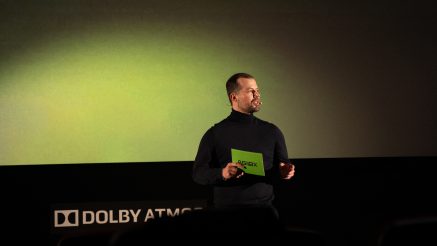
For 250 years, industrial progress has followed a remarkably consistent pattern: we have found new ways to amplify human capabilities. First muscle, then efficiency, then reliability, then connectivity. Now, we are entering the next chapter – intelligence. David Niedermayier, Co-CEO and Co-Founder of AGILOX, explores what happens when AI moves from our screens into machines, and why this shift could become critical for the future of European manufacturing.
By David Niedermaier, Co-CEO & Co-Founder, AGILOX
When we talk about smart manufacturing, we tend to think immediately about robots, autonomous systems and increasingly sophisticated machines. But before looking at where manufacturing is heading, I think it is worth taking a step back, because what we are experiencing today is not an isolated technological development. It is part of a much bigger story –- one that began around 250 years ago with the Industrial Revolution.
If we look back at those different chapters, a pattern becomes visible. Every major technological leap did more than improve the way we produced things. It changed the way we worked, how companies were organized and, ultimately, how society itself evolved.
The first Industrial Revolution began by amplifying human muscle. Steam power and mechanization allowed machines to perform physical work on a scale that had previously been impossible. The consequences reached far beyond the factory floor: people moved into cities, entirely new professions emerged and industrialization became one of the foundations of modern economic growth.
Electrification opened the next chapter. It introduced a new level of efficiency and made products such as household appliances and cars accessible to millions of people. From the 1970s onwards, automation added another dimension. Robots, PLCs and increasingly sophisticated electronics brought a new level of reliability and consistency to production.
Then came Industry 4.0. We connected machines to one another and connected factories to the digital world. Data became an increasingly important resource, allowing us to monitor processes, optimize operations and understand production in ways that had not previously been possible.
And now we are entering another chapter.
The chapter of intelligence.
AI is beginning to move from the screen into the machine, and that shift has implications that go far beyond technology itself.